U.S. consumer sentiment ticks up in January 2026, but households still feel squeezed
A University of Michigan survey shows U.S. consumer sentiment improved in January 2026 from December, though confidence remains near historic lows and households remain frustrated by past price increases and a softer job market.
- BYLINE
- Lagos Tribune News Desk
- PUBLISHED
- UPDATED
Sentiment improves, but the mood remains bleak
U.S. consumers reported a modest improvement in confidence in January 2026, according to the University of Michigan’s monthly sentiment survey as reported by The Wall Street Journal. The sentiment index rose to 56.4 in January from 52.9 in December, continuing a rebound from levels described as near historic lows.
Even with that uptick, the overall mood remains unusually downbeat compared with long-run norms. The Journal said recent readings have been among the worst since the survey began in the 1950s, putting today’s environment in the company of only a few other periods of intense consumer pessimism.
Why people still feel under pressure
The survey’s improvement does not mean consumers suddenly feel comfortable. Inflation has moderated over the last few years, but it remains above long-term standards, and many households continue to feel the lingering impact of earlier price spikes. In addition, the Journal reported that respondents are contending with a weakening job market, which can weigh heavily on expectations even when actual spending remains resilient.
Survey Director Joanne Hsu, cited by the Journal, pointed to continued pressure on purchasing power. That matters for the broader economy because sentiment can influence big-ticket decisions—such as buying a car, moving, or taking on new debt—even if day-to-day consumption remains steady.
A potentially useful signal for the Fed
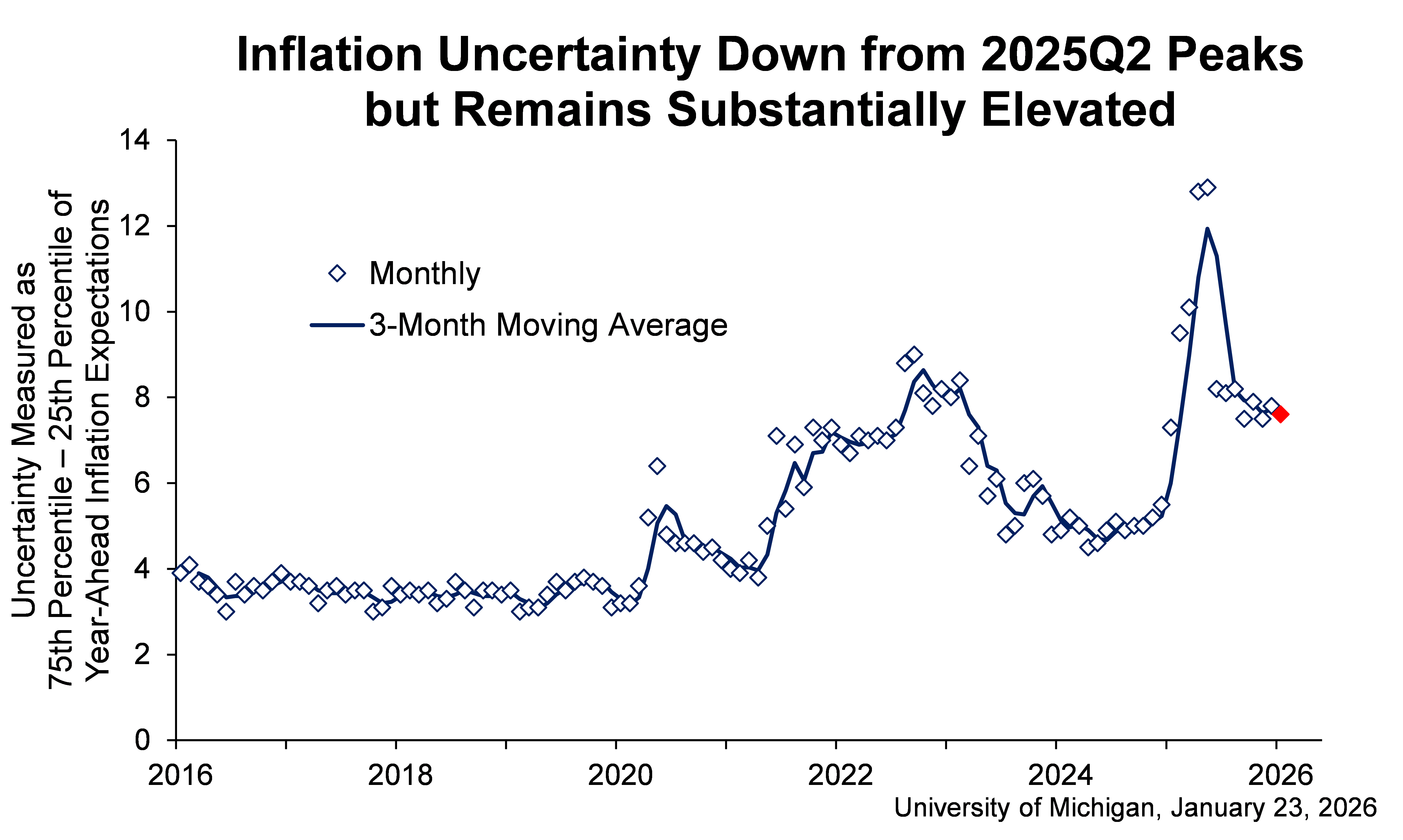
One of the more important details for policymakers is what consumers expect inflation to do next. The Journal reported that consumers anticipate only modest inflation going forward, which can help reduce the risk of a self-fulfilling cycle in which expectations drive wage and price behavior higher.
At the same time, the survey exists alongside evidence that consumer spending stayed strong through late 2025. The Journal noted that spending in October and November suggested solid economic growth in the fourth quarter, indicating that Americans’ actions may look sturdier than their survey answers.
What to watch in coming data
- Whether sentiment continues rising into February and March or stalls as job-market conditions evolve.
- Whether expectations for inflation remain anchored if energy or housing costs move again.
- How spending trends compare with survey attitudes, especially for discretionary categories.
For businesses, the key takeaway is a familiar one: consumers may still buy, but many feel financially constrained. That combination often pushes shoppers toward discounts, smaller packages, delayed purchases, and more aggressive comparison shopping—especially if wage growth doesn’t keep pace with core expenses.